News
-
Paper-Presentation at 45th International Conference on Organizational Science Development: Organization and the Longevity Society
Our recent publication, “Towards AI-Driven Transformation of Volunteering”, presents a comprehensive vision for how artificial intelligence can support and enhance volunteer-driven ecosystems. The work was developed within the context of our ongoing research activities in the CIvolunteer project.
Volunteering is a cornerstone of societal resilience and contributes significantly to addressing global challenges. Despite its importance, current digital infrastructures for volunteering remain fragmented and often lack intelligent support for key processes such as onboarding, skill identification, and long-term engagement.
In this work, we analyze the current state of digital volunteering platforms and identify key limitations in how volunteer opportunities and individual competencies are represented and matched. Based on this analysis, we propose a human-centric approach to integrating AI technologies across the entire volunteering lifecycle — from initial motivation and onboarding to active participation and post-engagement reflection.
A particular focus lies on combining symbolic and data-driven AI methods to enable transparent, adaptive, and scalable solutions. This includes the use of large language models (LLMs) to process unstructured volunteering data, as well as hybrid approaches that improve explainability and trust in AI-supported decision-making.
As a concrete step toward this vision, we explore methods for extracting and structuring relevant information from volunteering opportunities, forming the basis for more effective skill-based matching and personalized recommendations. The results highlight both the opportunities and challenges of applying modern AI techniques in this domain, especially with regard to data quality, explainability, and ethical considerations.
Overall, this work lays the foundation for a new generation of intelligent volunteering platforms that better support volunteers, organizations, and society as a whole, while ensuring that human values remain at the center of technological innovation.
-
Project Video online
We are excited to share the official CIvolunteer showcase video, now available online. The video brings together the key concepts and prototypes developed throughout the project into a single, coherent end-to-end user journey.
In just under eight minutes, the video illustrates how different components of the project interact — from goal-oriented volunteering and personalized recommendations to progress tracking and reflection. It also highlights the technical foundations behind these features, including system integration, communication flows, and digital proof mechanisms.
The video has already been used in workshops and focus groups to present consistent use cases and gather structured feedback from practitioners. It proved particularly valuable in facilitating discussions, making complex ideas more tangible, and aligning perspectives across different stakeholders.
Beyond research, the video also serves as a practical tool for outreach and collaboration. It supports presentations, pitches, and workshops by clearly communicating the project’s value and demonstrating how AI-driven solutions can improve volunteering processes. By visualizing real-world applications, it helps lower entry barriers for potential partners and accelerates discussions around pilots and future cooperation.
Overall, the CIvolunteer video represents an important step in making the project’s vision more accessible — and in bringing innovative, technology-supported volunteering solutions closer to real-world adoption.
-
CIvolunteer at the Austrian Volunteer Fair
The CIvolunteer project was recently presented at the Austrian Volunteer Fair, a central event that brings together organizations, initiatives, and individuals committed to volunteering and civic engagement. The fair provides a platform for exchange, networking, and raising awareness for innovative approaches to volunteering.
Our participation offered valuable insights into how current developments in AI-supported volunteering are perceived by practitioners and the general public. In particular, there was strong interest in the technical aspects of the project, especially regarding AI-based approaches for structuring and matching volunteering opportunities. These exchanges underline the relevance of research on intelligent systems for volunteering and highlight the need for accessible and transparent technological solutions.
Beyond individual conversations, the event enabled the establishment of promising connections with organizations and initiatives in the volunteering ecosystem. Initial discussions with stakeholders such as humanitarian organizations and digital platform providers indicate strong potential for future collaboration, particularly in the context of focus groups, real-world testing, and possible pilot deployments.
Overall, the participation in the Volunteer Fair provided valuable feedback from practice, strengthened the project’s network, and opened up new opportunities for collaboration aimed at advancing digital and AI-supported volunteering solutions.
-
Paper-Presentation at ICECCME 2025
Our recent publication, “Silverbullet or Mystery Box – LLM-based Soft Skill Classification in Volunteering”, has been accepted and presented at ICECCME'25. The work was carried out in the context of our ongoing research within the CIvolunteer project.
Volunteering represents a critical pillar for both essential infrastructures and the achievement of the Sustainable Development Goals (SDGs). In particular, skill-based volunteering plays a key role in ensuring that individuals can contribute effectively and that acquired competencies can be leveraged beyond individual engagements. However, systematically identifying and classifying relevant skills in volunteering contexts remains a significant challenge, as existing approaches are primarily tailored to structured job postings in the labor market.
This work investigates how established skill classification methods perform when applied to volunteering opportunities, which are typically characterized by unstructured, task-driven descriptions and a strong emphasis on soft skills. Building on this analysis, we propose a novel approach based on cache- and retrieval-augmented generation techniques to enable efficient soft skill classification without requiring costly large language model (LLM) fine-tuning.
The proposed methods are evaluated using a newly created dataset of volunteering opportunities with expert-labeled soft skills from a global platform. The results, assessed through both quantitative metrics and qualitative analysis, demonstrate that lightweight AI approaches can provide effective and scalable solutions for skill-based volunteer matching.
This work contributes to advancing intelligent support for volunteer coordination and highlights the potential of modern AI techniques to strengthen the sustainability and impact of volunteer-driven ecosystems.
-
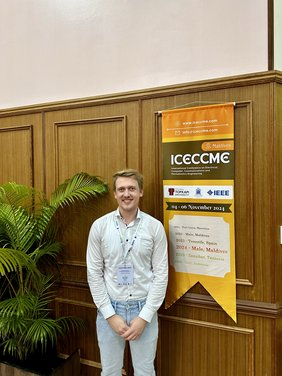
Paper-Presentation at ICECCME 2024
In early November, our colleague Christoph Gassner presented the publication “Towards Goal-Oriented Volunteering – LLMs to the Rescue?” at the 4th International Conference on Electrical, Computer, Communications, and Mechatronics Engineering (ICECCME). This work was developed as part of our CIvolunteer project.
The sustainability of the volunteer sector is increasingly at risk—partly due to demographic changes—despite the United Nations (UN) identifying volunteers as key actors in achieving the Sustainable Development Goals (SDGs) outlined in the 2030 Agenda. In Austria, where a significant portion of critical infrastructure relies on volunteer work, this development poses a serious threat to the operational capabilities of many organizations. The CIvolunteer project aims to strengthen the volunteer sector and ensure that volunteers are sustainably matched with organizations, taking their individual preferences into account.
The presented study examines the relationship between volunteers’ personal goals and suitable activities. In the first step, we analyzed the nature of personal goals and volunteer activities across various leading regional, national, and international platforms. The objective was to develop methods to identify activities that align with defined goals. Due to the unstructured nature of the available textual data, large language models (LLMs) were employed to establish connections between volunteers’ goals and available activities. To improve computational efficiency, we also investigated whether a pre-trained Cross-Encoder model could be adapted for this classification task using LLM-generated data. The resulting models were evaluated using standard metrics, descriptive statistics, and statistical tests to assess and quantify differences between the models.
This work makes a significant contribution to leveraging modern AI technologies to develop sustainable solutions for the volunteer sector.